
In the Waiting: Two CanIL Grads and Kwak'wala Bible Translation
Two CanIL grads spent years in what felt like an in-between season. Now it's shaping their work on a community-led Kwak'wala Bible translation.
A newborn does little more than eat, sleep, and demand to be held. Underneath all that repetition, though, something is happening every day. You just can't see it yet.
Chuck and Jocelyn Murphey are learning to look at their own lives the same way.
The Years That Felt Like Waiting
Jocelyn finished her MA in Linguistics in 2019. Chuck followed two years later. Both hoped to serve in Bible translation, but neither knew where. At the time, there were no opportunities for them to support an Indigenous Bible translation project in British Columbia. They could not have predicted that one would eventually emerge, or how closely their work in the intervening years would prepare them for it.
For a while, life was mostly paperwork and patience: the slow process of obtaining permanent residency and joining Wycliffe Canada. In the meantime, they got to work. Chuck and Jocelyn both spent those years supporting Haisla language revitalization efforts in northern British Columbia, part of the Wakashan language family. Jocelyn also worked with Michif, her own heritage language as a Métis woman.
It may have felt like a detour. It wasn't. It would take them years to understand why.
"The Lord has an amazing way of taking our life experience and creating fruit from it in ministry in ways that we could not have foreseen."
Jocelyn Murphey
When the Door Opened
In 2025, that fruit started to show.
Brody Naknakim, a community member who serves with North American Indigenous Ministries (NAIM), invited the Canadian Bible Society, Wycliffe Canada and CanIL to join NAIM in a fresh Kwak'wala Bible translation effort. Under Brody's leadership and coordination, these organizations are working collaboratively with members of several Kwakwaka'wakw communities on Vancouver Island.
Chuck and Jocelyn joined the initiative through Wycliffe Canada and CanIL, bringing their linguistic training and previous experience in Indigenous language revitalization to the wider team.
Kwak'wala, like Haisla, belongs to the Wakashan language family. The years Chuck and Jocelyn had spent listening to and learning from Haisla speakers were, without their knowing it, preparing them to work with another related language. What had once seemed like an in-between season was becoming part of the work they had hoped to do all along.
More Than a Text
For Chuck and Jocelyn, the work has never been only about producing a translated text. Each time the team works through a passage of Scripture together, whether in person or online, everyone involved is engaging with that part of God's Word. Elders, adults, and youth gather through the process, engaging with Scripture and with each other. It's discipleship as much as it is translation: community forming around the Word before the Word itself is even finished.
For Jocelyn, who has spent years working to strengthen her own heritage language, that connection between language and identity isn't theoretical. It's something she's lived alongside, in a different community, in a different season.
The Slow, Unseen Work
Most of that work is small, slow, and invisible from the outside. Chuck participates in online translation sessions, listening to Kwak'wala speakers offering words and phrases. Drawing on what he learned through Haisla, he asks focused questions about spelling and meaning. He then spends hours organizing what's been shared into a growing database, a resource that may one day help support a community-built dictionary.
Equally important to the task of translation is the work of writing Kwak'wala using community-established alphabets.

People driving past First Nations language signage across British Columbia may assume that Indigenous languages share one alphabet. They do not. Languages and communities have different writing systems, each with its own story of how it came to be.
How words are spelled and represented in print is more than a technical decision. It is an important expression of cultural value, history and identity. Learning to work within those established writing systems requires care, humility and attention. There are no shortcuts borrowed from somewhere else.
Why "Making a Bible Translation" Isn't the Whole Story
"Building relationships, developing a deep understanding of the language, and organizing language data don't produce immediate ministry success stories or polished resources," Chuck and Jocelyn explain. "Instead, we are gradually learning how to serve and support the community well."
This can make the work difficult to explain. Saying they are "making a Bible translation" can sound as though the goal is simply a finished object that will one day be handed to a community.
The real answer is bigger than that.
"We want people to encounter the Gospel through Scripture in their own language."
Chuck and Jocelyn Murphey
A finished translation is an important destination, but the process of reaching it creates opportunities for people to encounter Scripture now. Passage by passage and conversation by conversation, translation brings people together around God's Word. The translated passages provide the means for that engagement to continue and spread.
Gathering Around the Word
Brody sees the value of this work firsthand.
"I am happy that Chuck and Jocelyn are part of the team because of their high level of linguistic skills and experience. Also they exemplify what we value in our native culture which is working together and putting family as a high priority."
Brody Naknakim
The significance of this collaborative approach became increasingly visible during the team's visits to northern Vancouver Island in May and November 2025. Across those gatherings, people from different generations participated in the work. It was exactly the kind of gathering the Elders had asked for: to have their faith and language handed down together. Everyone involved was given opportunities to engage with the language, with Scripture and with one another.
For Chuck and Jocelyn, it offered a glimpse of what this careful work can make possible. In a season where progress is hard to measure, the response of community members affirmed that the work matters.
Back at CanIL, and Back to Basics
Back at CanIL, Chuck teaches and supports students preparing for cross-cultural language work. Jocelyn will return to her role as Executive Assistant to the President following maternity leave. Their own next generation arrived in June with the birth of their daughter, Anna.
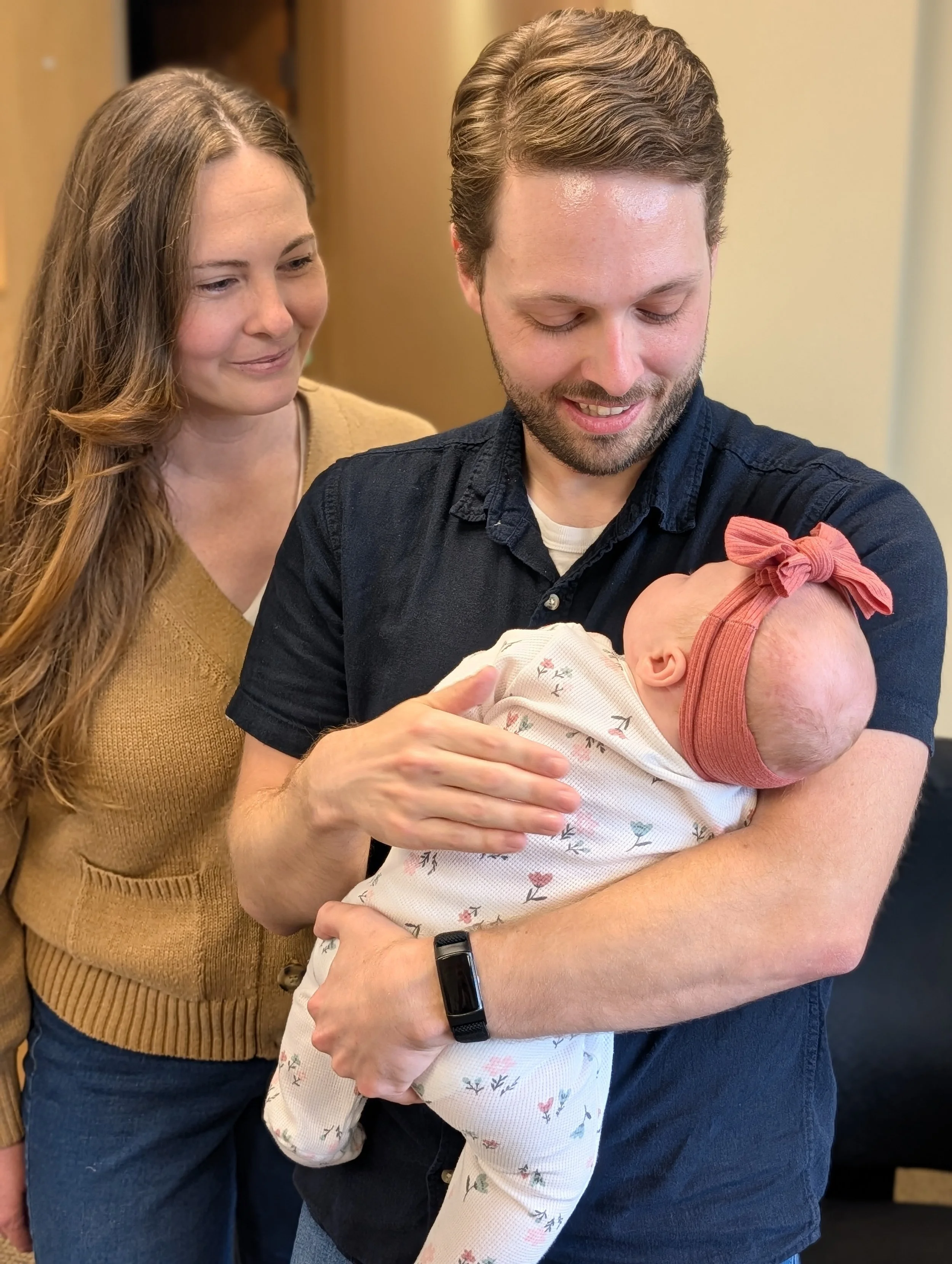
Caring for her has changed how they think about growth that does not always show up on the outside. A baby does not announce her own development. She simply eats, sleeps and grows, whether or not anyone is watching closely enough to notice.
Not Yet, But Already
There is no finished translation to hold yet. But people are already gathering around Scripture. Relationships are deepening. Language is being honoured. The work has begun, and so has the impact.
"For we are God's handiwork, created in Christ Jesus to do good works, which God prepared in advance for us to do." — Ephesians 2:10
Ready to prepare for work like this? Explore CanIL's programs and see how our training equips students to serve alongside language communities.
