
THE WORK
What it takes to help a language flourish
Behind every flourishing language are years of patient, specialized work done alongside the people who speak it, not for them.

Languages don’t slip away on their own.
Most of the world's languages weren't born small. They were made small — pushed to the edges by schooling that taught children their mother tongue didn't count, by borders drawn through the middle of a people, by histories that treated some languages as worth keeping and others as worth replacing.
The result is a quiet emergency. Hundreds of languages have never been written down at all. Thousands more are spoken fluently today but untaught, and slipping — a generation away from going silent. When a language goes, it takes a way of seeing the world with it, along with a community's hold on its own identity.
None of that is inevitable. A language can be studied, written, taught, and handed on — but it takes people with the right training, working in real partnership with the community whose language it is. That's the work CanIL exists for.
One craft - in six forms.
It all falls under one umbrella — language development, the end-to-end work of helping a language thrive. In practice it takes six forms.
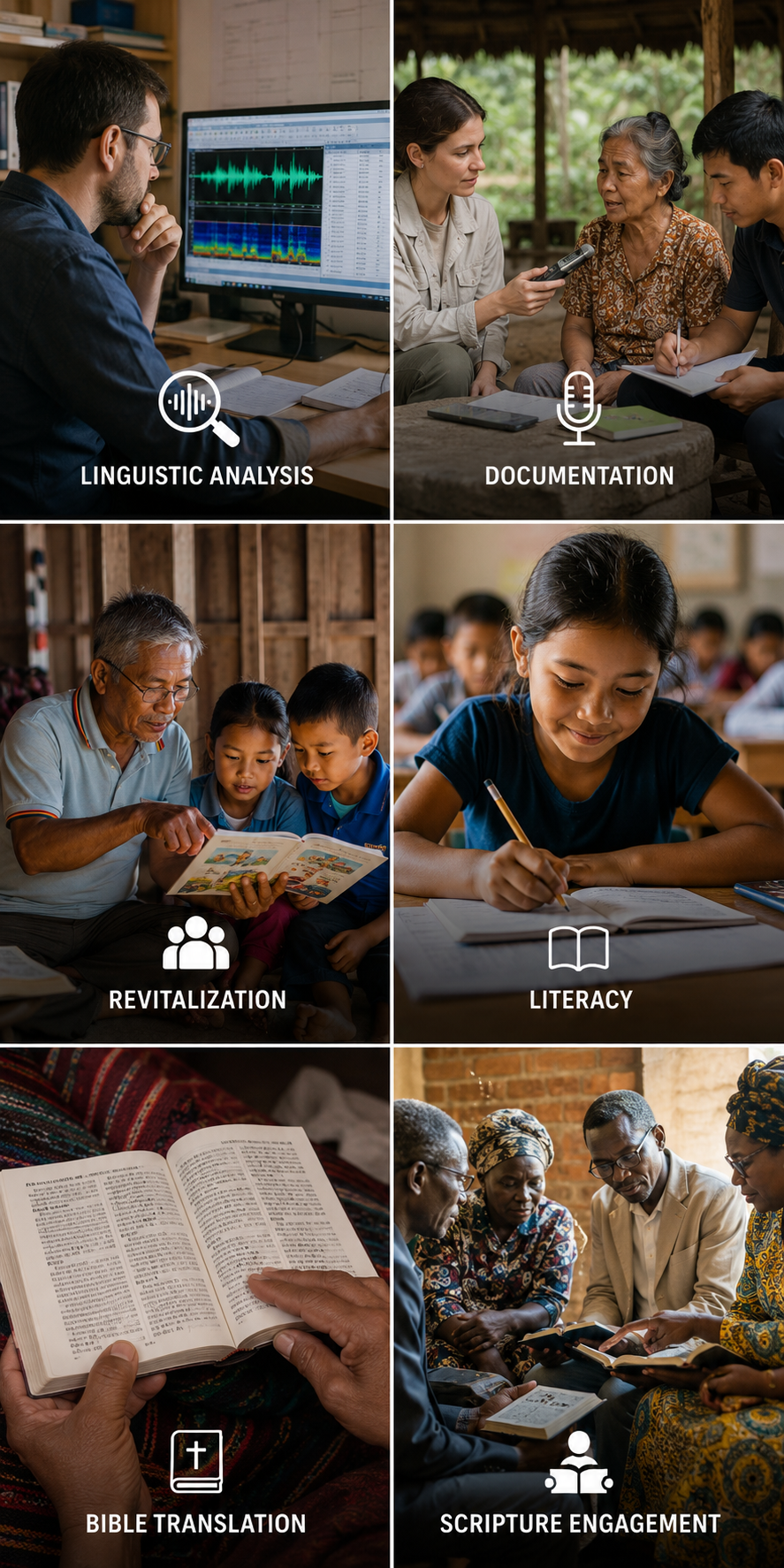
Linguistic analysis — Every project starts here: working out how a language actually works — its sounds, its grammar, the logic beneath the surface — and, where a community wants one, the writing system that lets it reach the page for the first time. Everything else is built on this.
Documentation — Recording a language while its knowledge is still living — its words, its stories, the way elders use it — so that even a language under threat leaves a lasting record its community can draw on for generations.
Revitalization — Less a separate task than the goal the rest serves: helping a community reclaim and strengthen a language that pressure has worn down, so it's spoken in homes and taught to children again, not just preserved in an archive.
Literacy — Building the alphabets, primers, and teaching that let people read and write their own language, often for the first time — opening the door to education in the language a person thinks and dreams in.
Bible translation — Equipping translators to carry Scripture faithfully into a mother tongue — work that draws on every skill above, and that a community can increasingly lead itself.
Scripture engagement — Translation is only the beginning. This is the work of helping a community hear, use, and live what's been translated, so the words on the page become part of everyday life.
Alongside, not instead of.
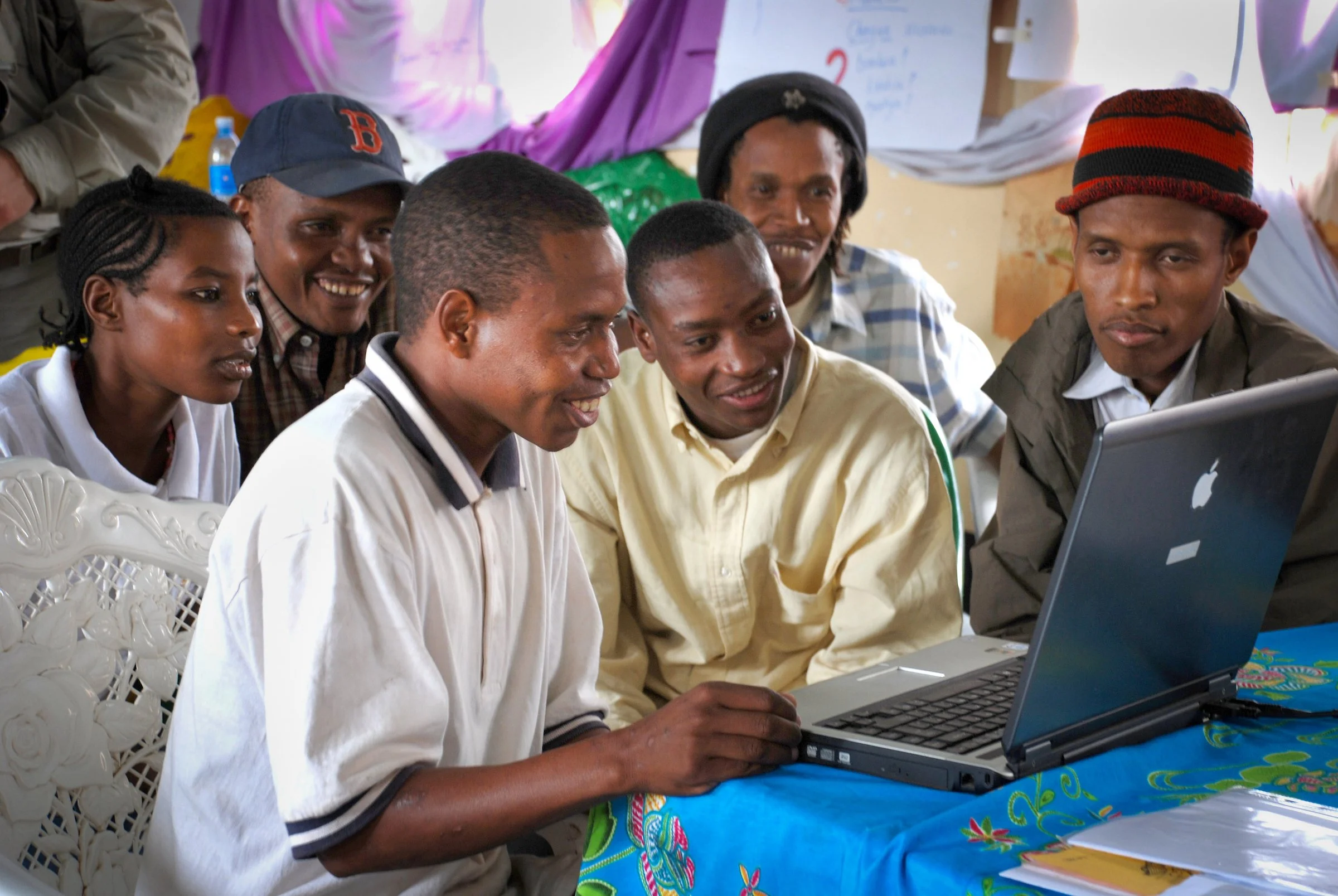
CanIL doesn't parachute experts in to do a community's work for it. The model is partnership: our people bring the linguistic training; the community brings the language, the priorities, and the leadership. More and more, the linguists, translators, and teachers doing this work are themselves members of the communities it serves — which is exactly how it should be.

Be part of it
This work needs people to do it, and people to sustain it.